



Coverstitch Sewing Machine
Industrial Coverstitch Sewing Machines
Interlock and Coverstitch Sewing Solutions for T-Shirts, Knitwear, Sportswear and Underwear
Category Description
TOPEAGLE supplies industrial coverstitch sewing machines for garment factories producing T-shirts, polo shirts, underwear, sportswear, activewear, knitwear and other stretch garments.
A coverstitch machine forms flexible multi-thread stitches that are widely used for hemming, covering, attaching elastic, binding and decorative stitching on knitted and stretch fabrics. These machines are also commonly referred to as interlock sewing machines in the industrial sewing industry.
Our range includes 2-needle and 3-needle coverstitch machines, flatbed interlock machines, cylinder-bed models and machines with top-cover thread for different garment constructions and sewing operations.
Coverstitch machines are especially important in knitwear production because their stitch formation provides greater flexibility than conventional lockstitch seams, allowing the finished seam to stretch with the garment.
TOPEAGLE helps garment manufacturers select suitable coverstitch and interlock machines according to the fabric, garment type, seam construction, needle gauge, number of needles and required attachments.


Product Categories
Latest Products
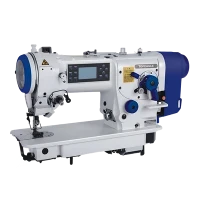
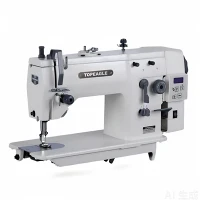

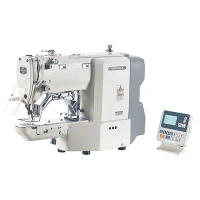
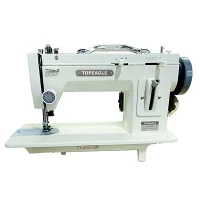
What Is a Coverstitch Sewing Machine?
A coverstitch sewing machine uses multiple needles and looper threads to form a flexible stitch commonly used on knitted and stretch garments.
Typical coverstitch seams have parallel needle threads on the upper surface of the fabric and a looper-thread formation on the underside.
Depending on the machine configuration, an additional top-cover thread can also be added to create a covering stitch on the upper side of the seam.
Coverstitch machines are commonly used for:
T-shirt hemming
Sleeve hemming
Knitwear finishing
Elastic attachment
Binding
Decorative covering
Sportswear production
Underwear production
Stretch garment assembly
Coverstitch vs. Interlock Sewing Machine
The terms coverstitch machine and interlock sewing machine are often used for closely related industrial sewing machines.
In many markets, “coverstitch” describes the stitch and its common applications such as hemming and covering, while “interlock machine” is frequently used as a general industrial machine name for this equipment category.
For machine selection, it is more important to consider:
Number of needles
Needle gauge
Stitch formation
Top-cover requirement
Flatbed or cylinder-bed construction
Differential feed
Required folders and attachments
rather than selecting a machine based only on the terms “coverstitch” or “interlock.”
2-Needle Coverstitch Sewing Machines
A 2-needle coverstitch machine produces two parallel rows of needle stitches with a looper-thread formation underneath.
It is widely used for:
T-shirt hems
Sleeve hems
Children's garments
Knitwear
Casualwear
Selected underwear operations
Two-needle configurations provide a clean and flexible seam and are commonly used for standard knitwear hemming.
3-Needle Coverstitch Sewing Machines
A 3-needle coverstitch machine produces three parallel rows of needle stitches and provides wider seam coverage.
Typical applications include:
Sportswear
Activewear
Underwear
Knitwear
Decorative covering
Elastic attachment
Binding operations
Wide garment hems
Three-needle machines are particularly useful when a wider or more decorative coverstitch is required.
Coverstitch Machines with Top Cover
Top-cover models add an additional covering thread on the upper surface of the seam.
This creates a more decorative stitch appearance and can provide additional seam coverage.
Typical applications include:
Sportswear
Activewear
Underwear
Stretch garments
Fashion knitwear
Decorative seams
The exact stitch formation depends on the number of needles, threads and machine configuration.
Flatbed Coverstitch Machines
Flatbed coverstitch machines provide a large, flat working surface and are suitable for general garment operations involving relatively flat components.
Typical applications include:
Hemming
Elastic attachment
Binding
Decorative covering
General knitwear production
Flatbed machines are widely used where easy handling of garment panels is required.
Cylinder-Bed Coverstitch Machines
Cylinder-bed machines provide better access to tubular garment components.
They are particularly useful for:
Sleeve hems
T-shirt hems
Underwear
Children's garments
Leg openings
Other tubular knitwear components
The smaller bed circumference makes it easier to guide closed or tubular garments around the sewing area.
Differential Feed for Stretch Fabrics
Differential feed is important when sewing knitted and elastic materials.
By adjusting the relative movement of the feed dogs, the machine can help control fabric stretching, waviness and puckering.
Correct differential-feed adjustment is especially important when sewing:
Jersey
Rib knit
Stretch fabrics
Sportswear materials
Underwear fabrics
Lightweight knitwear
Depending on the material and application, differential feed can also be used for selected gathering or stretching operations.
Main Applications
Industrial coverstitch and interlock sewing machines are widely used for:
T-shirts
Polo shirts
Knitwear
Underwear
Sportswear
Activewear
Yoga wear
Casualwear
Children's garments
Thermal underwear
Stretch garments
Fashion knitwear
Typical sewing operations include:
Bottom hemming
Sleeve hemming
Elastic attaching
Binding
Covering seams
Decorative stitching
Tape attaching
Knitwear finishing
How to Choose a Coverstitch Sewing Machine
Choose a 2-needle coverstitch machine for standard T-shirt, sleeve and knitwear hemming.
Choose a 3-needle coverstitch machine when wider seam coverage or decorative stitching is required.
Choose a top-cover model when the upper surface of the seam requires an additional decorative covering thread.
Choose a cylinder-bed machine for tubular components such as sleeve openings, garment hems and underwear.
Choose a flatbed machine for general covering, binding and operations involving relatively flat garment panels.
When selecting a machine, consider:
Garment type
Fabric type
Fabric elasticity
Number of needles
Number of threads
Needle gauge
Required seam width
Top-cover requirement
Flatbed or cylinder-bed construction
Differential-feed range
Folder or attachment requirements
Production speed
For accurate machine selection, customers are advised to provide fabric samples, garment photos and details of the required sewing operation.
Coverstitch Machine by Application
| Application | Recommended Machine Type |
|---|---|
| T-shirt bottom hemming | 2- or 3-needle coverstitch |
| Sleeve hemming | Cylinder-bed coverstitch |
| Knitwear | Differential-feed coverstitch |
| Underwear | 3-needle coverstitch |
| Sportswear | 3-needle top-cover machine |
| Activewear | Top-cover interlock machine |
| Elastic attaching | Coverstitch machine with suitable attachment |
| Binding | Interlock machine with binder |
| Decorative covering | 3-needle top-cover machine |
| Tubular garments | Cylinder-bed coverstitch machine |
Keywords
coverstitch sewing machine, industrial coverstitch sewing machine, coverstitch machine, interlock sewing machine, industrial interlock sewing machine, interlock stitch machine, 2 needle coverstitch machine, 3 needle coverstitch machine, top coverstitch sewing machine, flatbed interlock sewing machine, cylinder bed coverstitch machine, T-shirt hemming machine, T-shirt coverstitch machine, knitwear sewing machine, knitwear coverstitch machine, sportswear coverstitch machine, activewear sewing machine, underwear sewing machine, elastic attaching sewing machine
garment hemming machine, industrial garment sewing machine, apparel sewing machine
FAQ
What is an industrial coverstitch sewing machine?
An industrial coverstitch sewing machine uses multiple needle and looper threads to produce flexible seams for hemming, covering, binding and elastic attachment on knitted and stretch garments.
Is a coverstitch machine the same as an interlock sewing machine?
The terms are often used for closely related industrial machine types. “Coverstitch” commonly describes the stitch and its applications, while “interlock machine” is also widely used as an industrial machine category name. The actual machine configuration should be selected according to the required stitch, number of needles, gauge and garment operation.
What is a coverstitch machine used for?
Coverstitch machines are widely used for T-shirt hems, sleeve hems, underwear, sportswear, elastic attachment, binding and decorative covering on knitted garments.
Which machine is suitable for T-shirt hemming?
A 2- or 3-needle differential-feed coverstitch machine is commonly used for T-shirt bottom and sleeve hemming.
What is the difference between a 2-needle and 3-needle coverstitch machine?
A 2-needle machine produces two parallel needle stitch rows, while a 3-needle machine produces three rows and provides wider seam coverage. The correct configuration depends on the required seam appearance and garment construction.
What is a top-cover stitch?
A top-cover stitch adds an additional thread across the upper surface of the seam. It is commonly used for decorative covering on sportswear, underwear and stretch garments.
Why is differential feed important on a coverstitch machine?
Differential feed helps control the feeding of knitted and elastic fabrics, reducing unwanted stretching, seam waviness and puckering.
Which coverstitch machine is suitable for sportswear?
A 3-needle coverstitch machine with differential feed is commonly used for sportswear. A top-cover configuration can be selected when a decorative covering stitch is required.
What is the advantage of a cylinder-bed coverstitch machine?
A cylinder-bed machine provides easier access to tubular garment areas such as sleeve openings, garment hems and underwear components.
Can a coverstitch machine attach elastic?
Yes. Suitable coverstitch and interlock machines can attach elastic when equipped with the correct feeding device, folder or attachment.
Can one coverstitch machine perform different operations?
Yes, depending on the machine configuration and available attachments. Hemming, binding, elastic attachment and covering operations may require different folders, gauges or machine subclasses.
How do I choose the correct coverstitch machine?
Consider the garment, fabric elasticity, required stitch formation, number of needles, needle gauge, seam width, top-cover requirement, bed type and any folders or attachments needed for the operation.
TOPEAGLE, with over 20 years experience, is one of the leading coverstitch sewing machine manufacturers and suppliers in China. Our factory has introduced advanced equipment and technology to better serve you. Welcome to shop online for the best coverstitch sewing machine or the parts for sale with our factory and enjoy our unmatched prices and services.
