



Overlock Sewing Machine
Industrial Overlock Sewing Machines
High-Speed Overedge and Safety-Stitch Solutions for Apparel and Knitwear Production
Category Description
TOPEAGLE supplies industrial overlock sewing machines for garment factories producing T-shirts, shirts, underwear, sportswear, casualwear, trousers, uniforms, children's clothing and other apparel products.
An overlock sewing machine trims the fabric edge and forms an overedge stitch around the cut edge during sewing. Depending on the machine configuration, overlock stitches can be used for edge finishing, seam joining, seam reinforcement and stretch garment construction.
Our range includes 3-thread, 4-thread and 5-thread overlock sewing machines, as well as high-speed direct-drive and automatic models for different fabrics and sewing operations. Three-thread overlock machines are commonly used for edge finishing, while four-thread machines provide stronger and more flexible seams for knitted garments. Five-thread safety-stitch machines combine overedge stitching with an additional chainstitch seam and are widely used for garment assembly where greater seam strength is required.
TOPEAGLE helps garment manufacturers select suitable overlock machines according to the fabric, stitch type, seam construction, number of needles and threads, differential feed requirement and production speed.


Product Categories
Latest Products

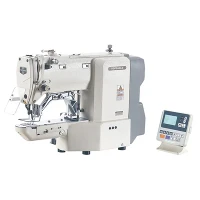
What Is an Overlock Sewing Machine?
An industrial overlock sewing machine forms stitches around the edge of the fabric while a built-in trimming mechanism cuts away excess material.
Unlike a conventional single-needle lockstitch machine, an overlock machine uses loopers and multiple threads to form an elastic overedge stitch.
This makes overlock machines particularly suitable for:
Finishing raw fabric edges
Joining knitted fabrics
Preventing fabric edges from fraying
Producing flexible seams
Sewing stretch garments
High-speed garment assembly
3-Thread Overlock Sewing Machines
A 3-thread overlock machine normally uses one needle and two loopers.
It is commonly used for:
Edge finishing
Preventing fabric fraying
Lightweight garments
Woven fabric edges
Selected knitwear operations
Three-thread overlock provides an economical solution when the main purpose is edge finishing rather than high-strength seam joining.
4-Thread Overlock Sewing Machines
A 4-thread overlock machine generally uses two needles and two loopers to produce a stronger and more elastic seam.
It is widely used for:
T-shirts
Knitwear
Underwear
Sportswear
Casualwear
Children's clothing
Stretch garments
The additional needle thread improves seam security, making 4-thread overlock one of the most common configurations for joining knitted garment panels.
5-Thread Safety-Stitch Overlock Machines
A 5-thread overlock machine typically combines an overedge stitch with a separate chainstitch seam.
This configuration provides both edge finishing and stronger seam joining in one operation.
Typical applications include:
Trousers
Workwear
Uniforms
Jackets
Woven garments
Medium-weight apparel
Garments requiring stronger assembly seams
Five-thread safety-stitch machines are especially useful where seam strength is more important than stretch alone.
Differential Feed for Knit and Stretch Fabrics
Differential feed is an important feature when sewing knitted and elastic materials.
By controlling the relative feeding movement of the front and rear feed dogs, differential feed can help reduce:
Fabric stretching
Wavy seams
Puckering
Uneven feeding
It can also be adjusted for selected gathering or stretching operations depending on the machine and fabric.
For T-shirts, sportswear, underwear and other knitted garments, the correct differential-feed adjustment is important for maintaining a smooth seam appearance.
Direct-Drive Overlock Sewing Machines
Direct-drive overlock machines integrate the servo motor directly with the sewing head.
Depending on the model, advantages can include:
Responsive speed control
Reduced vibration
Lower operating noise
Reduced transmission loss
Compact installation
Needle positioning
Automatic functions on selected models
Direct-drive models are suitable for modern garment production lines requiring efficient, high-speed operation.
Main Applications
Industrial overlock sewing machines are widely used for:
T-shirts
Polo shirts
Knitwear
Underwear
Sportswear
Activewear
Casualwear
Children's garments
Shirts
Trousers
Uniforms
Workwear
Jackets
Dresses
General garment production
Typical sewing operations include:
Fabric edge finishing
Side seam joining
Shoulder seams
Sleeve joining
Trouser seams
Knit garment assembly
Stretch seam construction
Safety-stitch joining
How to Choose an Overlock Sewing Machine
Choose a 3-thread overlock machine mainly for edge finishing and anti-fraying operations.
Choose a 4-thread overlock machine for joining knitted and stretch fabrics where a flexible and secure seam is required.
Choose a 5-thread safety-stitch machine for trousers, uniforms, workwear and woven garments requiring stronger seam construction.
Choose a differential-feed overlock machine for knitwear, sportswear and elastic fabrics where material stretching or seam waviness must be controlled.
Choose a direct-drive or automatic overlock machine when high production efficiency, precise speed control and reduced manual operations are required.
Machine selection should be based on:
Fabric type
Fabric weight
Fabric elasticity
Required stitch type
Number of needles
Number of threads
Seam strength
Differential-feed requirement
Cutting width
Sewing speed
Automatic-function requirements
For accurate machine selection, customers should provide fabric samples and details of the required seam construction.
Overlock Machine by Application
| Application | Recommended Machine Type |
|---|---|
| Fabric edge finishing | 3-thread overlock |
| T-shirt assembly | 4-thread overlock |
| Knitwear | 4-thread differential-feed overlock |
| Underwear | 4-thread overlock |
| Sportswear & activewear | 4-thread stretch-fabric overlock |
| Shirts and woven garments | 3- or 5-thread overlock |
| Trousers | 5-thread safety-stitch machine |
| Uniforms & workwear | 5-thread safety-stitch machine |
| High-volume garment production | High-speed direct-drive overlock |
Keywords
overlock sewing machine, industrial overlock sewing machine, overlock machine, industrial overlocker, overedge sewing machine, industrial serger sewing machine, 3 thread overlock sewing machine, 4 thread overlock sewing machine, 5 thread overlock sewing machine, safety stitch sewing machine, high speed overlock sewing machine, direct drive overlock sewing machine, automatic overlock sewing machine, garment overlock sewing machine, knitwear overlock sewing machine, T-shirt overlock sewing machine, sportswear overlock sewing machine, underwear overlock sewing machine, differential feed overlock machine, apparel sewing machine, industrial garment sewing machine
FAQ
What is an industrial overlock sewing machine?
An industrial overlock sewing machine trims the fabric edge and forms an overedge stitch at the same time. It is widely used for edge finishing and seam joining in garment production.
What is the difference between an overlock machine and a lockstitch machine?
A lockstitch machine normally uses a needle thread and bobbin thread to form a straight stitch. An overlock machine uses needles and loopers to form stitches around the fabric edge and normally includes a trimming mechanism.
What is a 3-thread overlock machine used for?
A 3-thread overlock machine is mainly used for finishing raw fabric edges and preventing fraying.
What is a 4-thread overlock machine used for?
A 4-thread overlock machine is commonly used to join knitted and stretch fabrics such as T-shirts, underwear and sportswear because it produces a stronger and more flexible seam than a basic 3-thread overedge stitch.
What is a 5-thread overlock machine?
A 5-thread machine typically combines an overedge stitch with a chainstitch seam, providing edge finishing and strong seam joining in one operation. It is commonly used for trousers, uniforms, workwear and woven garments.
Which overlock machine is suitable for T-shirts?
A 4-thread differential-feed overlock machine is commonly used for joining T-shirt panels and other knitted garments.
Which overlock machine is suitable for trousers?
A 5-thread safety-stitch overlock machine is commonly used for trouser assembly where both edge finishing and stronger seam joining are required.
Why is differential feed important?
Differential feed helps control how the fabric enters the sewing area. Correct adjustment can reduce stretching, waviness and puckering when sewing knitted or elastic fabrics.
Is an overlock machine the same as a serger?
The terms are often used for similar machine types. “Overlock sewing machine” is more common in the industrial sewing-machine market, while “serger” is especially common in North American consumer and sewing terminology.
How do I choose the correct overlock machine?
Consider the fabric type, elasticity, seam construction, required stitch type, number of threads, differential-feed requirement, cutting width and production speed. Fabric samples are recommended when selecting the correct machine configuration.
TOPEAGLE, with over 20 years experience, is one of the leading overlock sewing machine manufacturers and suppliers in China. Our factory has introduced advanced equipment and technology to better serve you. Welcome to shop online for the best overlock sewing machine or the parts for sale with our factory and enjoy our unmatched prices and services.
