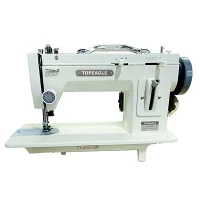
A wrinkle of slip sewing material sewn by an overlock sewing machine
1. Feeding deficit ratio is too small; Move the differential wrench downward until the joint material is flat;
2. The bottom surface of the presser foot is uneven with the plane of the feeding tooth; Adjust according to technical requirements;
3. Control line pressure is too strong; Readjust the wire control strength;
4. The pressure of the holding device is too strong or too weak; Adjust the pressure strength of the fixture;
5. The feeding dog is too protruding from the needle plate; Adjust its correct height;
6. The cutter cannot cut quickly, Sharpen the blade or replace it with a new one, and check the coordination of upper and lower blades;
7. Differential feeding is not matched; Adjust proper differential feeding;
8. The needle is too thick; Choose suitable thread and needle;
9. The edging width is narrower than the needle plate tongue; Adjust the edging width or change the needle plate tongue;
The overlock sewing machine sews elastic sewing material to produce expansion
1. The surplus ratio of feeding dog is too small, resulting in elongation; Move the differential wrench upward to the "0" position until the seam is flat;
2. The surplus ratio of feeding dog is too large, resulting in shortening; Move the differential plate hand to the "0" position;

The upper and lower seam materials are uneven and the lower seam is short
1. The presser foot pressure is too loose; Increase the pressure of the pressure regulating screw;
2. Presser foot resistance is too large or uneven; Polish the front of the presser foot or install a flat presser foot;
3. The differential tooth is not on the same plane as the feeding tooth surface; Adjust the height of the feeding teeth as required to make the two tooth surfaces flush;
Irregular edge cutting of overlock sewing machine
1. The upper and lower blades are blunt; Grind the edges of the upper and lower blades with a diamond grinding wheel or black silicon carbide grinding wheel, and then grind the blade plane with grinding paste until it is sharp;
2. Poor contact and improper position of the cutter; Adjust as required;
If you want to know us, please contact: wym@eagleco.cn