The problem of feeding the upper fabric of the lockstitch sewing machine is solved. How to solve the problem caused by the lower fabric?
1. First of all, let's explain the processing technology in Figure 1 below. it is the down and cotton clothing fabric. The upper and lower fabrics are extremely thin, the middle is filled with down or cotton, and the zipper is sewn. The total is 4 layers of fabric. according to the general sewing process, the zipper is on the top layer, and the three layers of body material are sewn under the zipper. Let's analyze why the arching phenomenon occurs.
Because of the fluffy nature of the down cotton clothing fabric, the hem will be longer than the body. In order to solve this problem, the process requirements of the clothing generally choose the zipper to be about 1 inch shorter than the hem (depending on the fluffy effect of the specific fabric). The length of the hem and the body can be consistent by folding the long hem into the zipper. However, in the traditional sewing process, it is necessary for workers to push and pull the cloth edge to sew it to the zipper, which will cause an uneven phenomenon of too loose and too tight, resulting in arching.

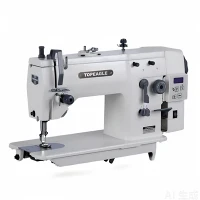
2. How to do a good job in closing to solve the arch camber problem? According to the above-mentioned sewing process, if you want to fold the extra 1 inch of cloth edge into the zipper during sewing, you need to use the lower differential lockstitch sewing machine, and use the lower differential feed dog to evenly fold the lower fabric into the zipper in advance to achieve a satisfactory effect.
|
|
|
|
|
|


Because the zipper is relatively hard, there is basically no problem with the feeding of the upper layer. It can be basically adjusted to synchronous feeding, There is a lower differential quick adjusting device (see the figure below) on the inner side of the fuselage. Based on the synchronous scale line, the adjusting nut can be adjusted below the reference line if the lower feeding speed needs to be increased, and can be adjusted above the reference line if the lower feeding speed needs to be reduced.
The lower differential ratio can be easily adjusted by hand to quickly meet the closing requirements in garment processing. Therefore, the upper synchronous lower differential lockstitch sewing machine will be selected for the upper zipper process.