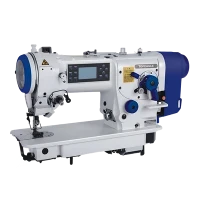
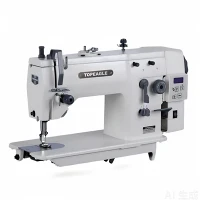
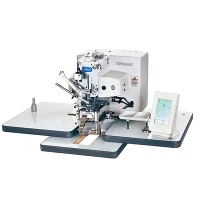
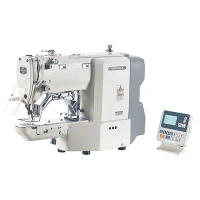
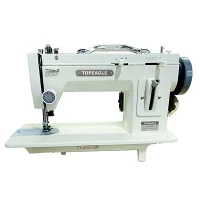
The quality requirements for button sewing and buttonhole making are precise positioning, secure button attachment, proper alignment of buttons and buttonholes, no thread fraying, and no fabric fuzziness. The buttonhole size should be appropriate, ensuring at least six threads within each buttonhole, with no less than two stitches on the top and bottom for completion. For thicker fabrics, the button sewing thread may need to be wrapped around a high shank, with the shank height matching the fabric thickness, and no exposed thread ends.
For metal buttons, they should be intact and free from rust or discoloration. Snap buttons should be securely attached, with an appropriate amount of force required for pressing and opening.
To ensure accurate button and buttonhole positioning, the corresponding locations on the garment pieces should be pre-marked. The button sewing and buttonhole making equipment should be properly adjusted, with the buttonhole knife width matching the button diameter. Currently, various types of buttonhole and button sewing equipment are available, with different button styles suiting different machines. If special buttons require manual sewing, the number of threads within the buttonhole must be ensured, and the sewing thread should pass through the buttonhole at least twice during button attachment. An eyelet buttonhole sewing machine should be used for thicker fabrics and buttons.

◆Attention should be paid to the direction of buttonholes:
For shirts, the buttonholes on the collar stand and cuff plackets are horizontal, while those on the front placket and sleeve vents are vertical, typically using a straight buttonhole machine.
For suit jackets, the buttonholes on the front placket are horizontal, using an eyelet buttonhole sewing machine, with the rounded end positioned towards the edge.
For pant and skirt back pockets, the buttonholes are vertical, and a straight buttonhole machine
can be used for smaller, thinner buttons.
To ensure accurate button and buttonhole positioning, the corresponding locations on the garment pieces should be pre-marked before the button sewing process. The button sewing and buttonhole making equipment should be properly set up, with the buttonhole knife width matching the button diameter. Currently, a wide range of buttonhole and button sewing machines are available, each suited for different button types and styles.
If special buttons require manual sewing, it is crucial to ensure the appropriate number of threads within the buttonhole, typically at least six threads. Additionally, the sewing thread should pass through the buttonhole at least twice during button attachment to ensure secure fastening. For thicker fabrics and buttons, an eyelet buttonhole sewing machine should be used to accommodate the increased thickness and create a buttonhole with a rounded end.
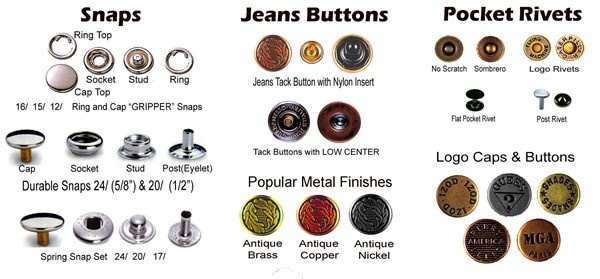
Proper attention should be paid to the direction of buttonholes, as different garment types and areas have specific orientations:
For shirts, the buttonholes on the collar stand and cuff plackets are horizontal, while those on the front placket and sleeve vents are vertical. Generally, a straight buttonhole machine is used for these applications.
For suit jackets, the buttonholes on the front placket are horizontal, requiring the use of a rounded buttonhole machine, with the rounded end positioned towards the edge or seam.
For pant and skirt back pockets, the buttonholes are oriented vertically. In these cases, a flat buttonhole machine can be used, especially for smaller and thinner buttons.
If you require to purchase a sewing Machine, please contact us at sale@eagleco.cn.