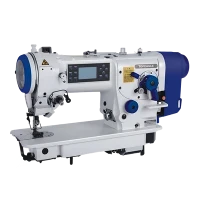
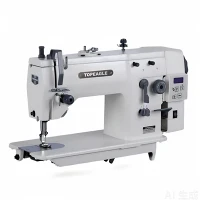
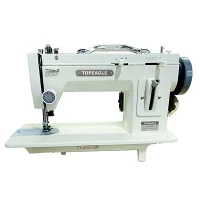
Zigzag and overlock are two common stitches used in sewing machines. While both of these stitches can be used for a variety of purposes, they have some key differences that make them more suitable for certain types of fabrics and projects.
A Zigzag stitch is a basic stitch that sews in a back-and-forth motion, creating a pattern that looks like a series of angled lines or a "zigzag". This stitch is commonly used to finish raw edges, prevent fraying, and create decorative stitching. It is a versatile stitch that can be adjusted in length and width to achieve different effects, from a tight zigzag for securing seams to a wider, looser zigzag for embellishment.
One of the main advantages of using a zigzag stitch is that it can be used on almost any type of fabric, from lightweight and delicate fabrics like silk and chiffon to heavier and sturdier fabrics like denim and canvas. Because the stitch can be adjusted in width and length, it is also useful for creating custom stitch patterns and designs.
However, one of the drawbacks of using a zigzag stitch is that it does not provide as much structural support as other stitches, especially when sewing heavy or thick fabrics. This can lead to seams that may come apart or fray over time, especially with frequent use or washing.
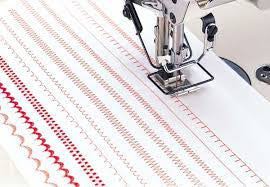
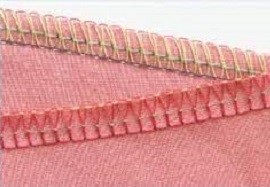
Overlock stitch, on the other hand, is a specialized stitch that is designed to finish raw edges and create a clean, professional-looking seam. This stitch uses multiple threads and a looping mechanism to create a strong, secure seam that can withstand wear and tear. It is commonly used in garment construction, as well as in other projects that require strong, durable seams.
The main advantage of using an overlock stitch is that it provides much more structural support than a zigzag stitch. The multiple threads and looping mechanism create a sturdy seam that can hold up well under stress and strain, even with frequent use or washing. Additionally, because the stitch finishes raw edges, it eliminates the need for additional finishing techniques like serging or binding.
However, one of the limitations of using an overlock stitch is that it is not as versatile as a zigzag stitch. Overlock machines are typically designed for specific types of fabrics and projects, and may not be suitable for all materials or stitch patterns. Additionally, because the machines are specialized, they can be more expensive and require more maintenance than a standard sewing machine.
In summary, the main difference between zigzag and overlock stitches is their purpose and the level of support they provide. Zigzag stitch is a versatile stitch that is useful for finishing raw edges, creating decorative stitching, and securing seams. It can be used on a wide range of fabrics and can be adjusted to achieve different effects. Overlock stitch, on the other hand, is a specialized stitch that is designed for creating strong, durable seams and finishing raw edges. It is not as versatile as a zigzag stitch, but provides much more structural support and eliminates the need for additional finishing techniques. Ultimately, the choice between these two stitches depends on the specific project, fabric, and desired outcome.