TOPEAGLE INTERNATIONAL LTD.
Add: No.31 Zhangba Er Road, Xian, Shaanxi, China
Tel: +86-29-88888400
Mob: +8613991913180
Whatsapp: +8613991913180
E-mail: sale@eagleco.cn
The thread tightness ratio is one of the important indexes to test the sewing performance of sewing machines.
In the past, the fabric variety was single, the thread tightness was not paid attention to. Nowadays, a variety of fabrics are emerging, and the emergence of some knitted fabrics with great stretch in any direction has increased the difficulty of sewing.
In the actual sewing process, we should not only ensure that there is no needle skipping, continuous thread, and floating thread but also ensure that the knitted fabric can not cross-section the line and bottom line in the process of being stretched.
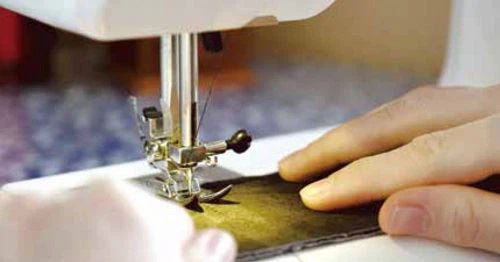
When inspecting knitted products, inspectors usually stretch the fabric vigorously. If there is a cross-section thread or bottom line in the stretching process, it will be judged as an unqualified product.
In order to avoid the above situation, we need to understand and discuss the concept of thread tightness.
What is the thread tightness ratio?
Thread tightness ratio refers to taking out the consumed bottom thread and measuring the actual length of the consumed bottom thread without needle skipping, thread breakage, and floating thread in the sewing process. The length percentage between the top thread and the bottom thread is the thread tightness.
Taking the sewn fabric of 10cm unit length as an example, the value of thread tightness of 100% is the most ideal, generally, no more than 120%, more than 120% is regarded as unsatisfactory.
TOPEAGLE INTERNATIONAL LTD.
Add: No.31 Zhangba Er Road, Xian, Shaanxi, China
Tel: +86-29-88888400
Mob: +8613991913180
Whatsapp: +8613991913180
E-mail: sale@eagleco.cn