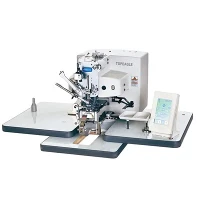
1. Sewing Equipment
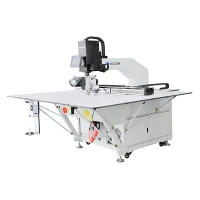
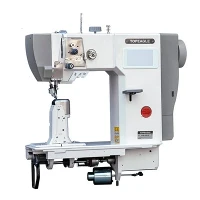
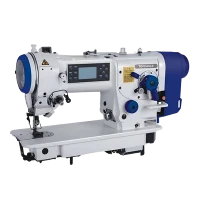
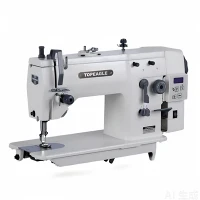
In garment processing, sewing equipment is mainly used to connect the cut pieces together in a certain form to form clothes. Due to the different characteristics of various fabrics and the diversity of clothing styles, a variety of sewing equipment is needed to meet the requirements of sewing. For example, to sew collars, pockets, plackets and other parts of the sewing machine should be used (lockstitch sewing); sewing knitted pieces of clothing using an overlock machine (overlock stitch), bandage sewing machine (bandage stitch) and other sewing; sometimes in order to improve the decorative nature of the seams, the use of embroidery machines, flower needle machine and so on. In addition, specialized sewing machines are needed for specific parts of the garment, such as lockstitch machines, buttonholing, hemming, and so on.
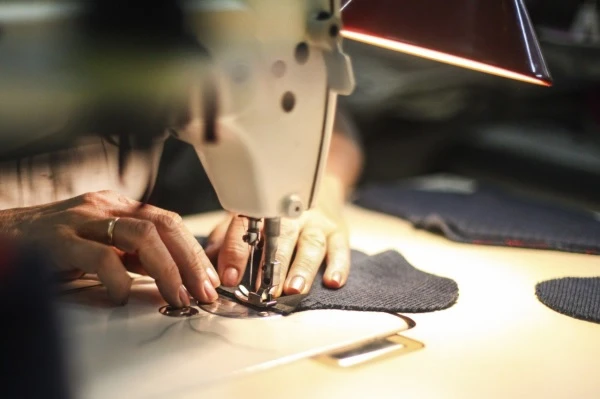
01. Lockstitch machines
Depending on the type of fabric feed, there are underfeed, differential feed, needle feed, up and down differential system and so on. Differential feed lockstitch sewing machines are ideal for sewing elastic fabrics; needle feed is generally used for sewing thicker fabrics or fabrics that slide easily; top and bottom differential feed lockstitch sewing machines are suitable for sewing two types of fabrics with different stretch properties (e.g. knitted fabrics and woven fabrics).
In addition, there are also lockstitch sewing machines with knife cutting edges, which can eliminate the need for trimming the edges after sewing, and are used for sewing collars, sleeve heads, bag flaps, etc.
The use of double-needle lockstitch sewing machines allows two parallel lockstitch seams to be sewn at the same time, which increases productivity and improves the appearance of the seams, and is an indispensable machine for sewing outerwear, sportswear, shirts, and so on.
02. Overlock machine
Overlock machine is a general term for the formation of overlock seams (500 types of seams). Overlock machines are used for cutting and sewing the edges of cut pieces, overlocking the edges of cloth, and preventing the edges of clothing pieces from dragging apart. It is widely used to sew hems, cufflinks, collars, trouser hems, and other folded edges of garments. Overlock machines are commonly known as lockstitch machines or cuffing machines.
03. Stitching Machine
Newer bandage sewing machines are equipped with automatic thread cutting, and there are also bandage sewing machines for professional sewing of elastic bands.
The bandage sewing machine is widely used in knitting products, such as splicing, collar rolling, piping, taping, folding, bandage reinforcement, trimming, and so on.
04. Button sewing machine
The button sewing machine is used to sew clothing buttons and special sewing equipment, most of them use single-line chain stitch, and only a few use flatlock stitch.
05. Lockstitch machine
The buttonholing machine is also known as a buttonhole machine, according to the open buttonhole is divided into flat head buttonholing machine and round head buttonholing machine.
Flat-head lockstitch machines are mostly used for men's and women's shirts, children's clothing, and thinner fashion fabrics.
Round-head buttonhole machine is mostly used for suits, jackets, and other round-head buttonholes. Round head lockstitch machine processing out of the lockstitch beautiful, large space, easy to button through. At the same time, round head buttonholes are also divided into first cut and then lock and first lock and then cut. The buttonholes made by the round-head buttonhole machine are roughly divided into round heads with tails, round heads without tails, flat heads with tails, and flat heads without tails.
06. Knotting Machine / Edge Taping Machine / Sleeve Taping Machine
A knotting machine is also called a knotting machine, which is used to prevent the end of the thread from dragging and reinforcing the thread.
Hemming machines are used for hems and trouser legs of various types of outerwear.
Sleeve-upper machine is a special sewing equipment for assembling the sleeves and the body of the garment. The process of the upper sleeve is difficult, demanding, and costly, but it can be greatly simplified with the use of a sleeve-supporting machine.