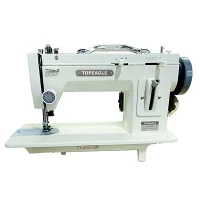
What Sewing Machines Are Used for Making Diving Suits and Wetsuits?
Diving suits and wetsuits are commonly made from neoprene and other stretch materials, which require different sewing methods from ordinary woven garments. The seams need to maintain flexibility, withstand repeated stretching, and, depending on the product, help limit water penetration.
For this reason, choosing the right wetsuit sewing machine or neoprene sewing machine depends largely on the seam construction and the type of diving suit being produced.
1. Flatlock Sewing Machine
A flatlock sewing machine is widely used for wetsuits, diving suits, rash guards and other stretch products where a flat, flexible seam is required.
Flatlock stitching joins the material while creating a relatively flat seam, helping reduce bulky seam allowances against the body. This makes it particularly suitable for products where comfort and flexibility are important.
Typical applications:
Wetsuits and diving suits
Rash guards
Surfing garments
Stretch sportswear
Neoprene products
For wetsuit production, flatlock machines are commonly used on seams where flexibility and wearer comfort are priorities.
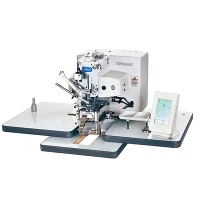
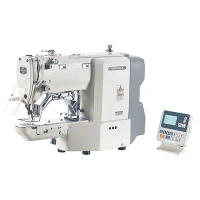
2. Blind Stitch Sewing Machine for Neoprene
A blind stitch sewing machine is another important machine used in neoprene and wetsuit production.
Unlike conventional stitching that penetrates completely through the material, blind stitching can be adjusted to penetrate only part of the material thickness. This makes it particularly useful for certain wetsuit seam constructions where full needle penetration is undesirable.
Blind stitching is often associated with glued and blind stitched (GBS) wetsuit seams. The neoprene panels are first joined with adhesive and then reinforced by blind stitching.
Main advantages include:
Suitable for thick neoprene materials
Stitching does not need to penetrate completely through the material
Helps maintain the performance of glued neoprene seams
Suitable for premium wetsuits and diving suits
For manufacturers producing higher-performance wetsuits, a suitable neoprene blind stitch machine is therefore an important part of the production line.

3. Overlock Sewing Machine
An overlock sewing machine may also be used for selected operations involving stretch fabrics, linings and other components used in diving and water-sports garments.
Depending on the product construction, overlock machines can be used for joining or finishing elastic and knitted materials.
They are particularly useful when production includes not only thick neoprene wetsuits but also:
Diving skins
Rash guards
Swim and surf garments
Stretch linings
Other elastic technical garments
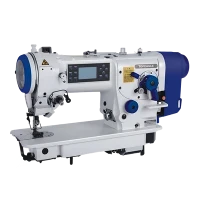
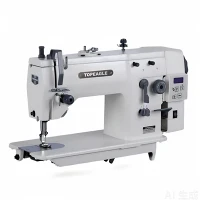
4. Zigzag Sewing Machine
A zigzag sewing machine can be used for selected reinforcing, elastic attaching and component sewing operations.
Because zigzag stitches can accommodate more movement than a conventional straight stitch, they are useful for applications involving elastic or flexible materials.
Typical operations can include:
Elastic attaching
Reinforcement
Straps and accessories
Selected neoprene components
Stretch material sewing
The exact zigzag configuration should be selected according to material thickness, seam construction and required stitch pattern.

5. Tape and Seam Reinforcement Equipment
Some diving suits and technical neoprene products require additional reinforcement around seams or stress areas.
Depending on the manufacturing process, specialized equipment may be used for applying seam tape, reinforcement tape or other technical materials.
The appropriate equipment depends strongly on the actual seam construction, adhesive system and material being processed, so testing with the customer's material is recommended before machine selection.
Which Sewing Machine Is Best for Wetsuit Production?
There is no single machine that performs every operation in a wetsuit production line.
A typical machine selection may include:
| Sewing Process | Recommended Machine Type |
|---|---|
| Flat, flexible seam construction | Flatlock sewing machine |
| Glued and blind stitched seams | Neoprene blind stitch sewing machine |
| Stretch fabric joining / finishing | Overlock sewing machine |
| Elastic and reinforcement operations | Zigzag sewing machine |
| Seam reinforcement | Specialized tape / seam equipment |
The correct combination depends on the neoprene thickness, seam construction, product type and required performance.
How to Choose a Sewing Machine for Neoprene
Before selecting an industrial sewing machine for diving suits or wetsuits, manufacturers should consider several factors:
Material thickness
Neoprene is available in different thicknesses, and machine configuration must be suitable for the material being sewn.
Seam construction
Flatlock, blind stitch, overlock and reinforced seams require different machine types.
Needle penetration
For some wetsuit constructions, particularly glued and blind stitched seams, controlling how deeply the needle penetrates the neoprene is important.
Stretch and flexibility
The finished seam should work with the elasticity of the material rather than unnecessarily restricting it.
Actual production samples
Whenever possible, machine selection and adjustment should be based on the customer's actual neoprene, seam structure and finished-product requirements.
TOPEAGLE Sewing Solutions for Diving Suits and Neoprene Products
TOPEAGLE supplies industrial sewing machines for diving suits, wetsuits, neoprene products, sportswear and technical textile applications.
Instead of selecting a machine only by model or specification, we recommend considering the complete application:
Material → Seam Construction → Sewing Operation → Machine Type
If you are setting up a wetsuit production line or looking for a suitable diving suit sewing machine, wetsuit sewing machine or neoprene sewing machine, send us your material thickness, seam sample and required sewing process. Our team can help identify the appropriate machine configuration.
Frequently Asked Questions
What sewing machine is used to sew wetsuits?
Flatlock and blind stitch machines are two important machine types used for wetsuit production. Other machines such as overlock and zigzag machines may be used for specific operations.
Can a normal industrial sewing machine sew neoprene?
It depends on the neoprene thickness and required seam. Although some general-purpose machines may sew certain neoprene materials, specialized wetsuit production often requires machines designed for specific seam constructions.
What is a GBS seam in a wetsuit?
GBS means Glued and Blind Stitched. The neoprene edges are glued together and the seam is reinforced with blind stitching that is controlled so it does not need to penetrate completely through the material.
What is the difference between flatlock and blind stitch for wetsuits?
Flatlock creates a relatively flat and flexible seam and is commonly used where comfort and flexibility are important. Blind stitching is used in different seam constructions, particularly glued seams where full penetration through the neoprene is undesirable.